Sv
Sv  En
En 
Share with


Case Studie
When Fackförbundet ST needed a new office, the goal was not simply to relocate. The ambition was to create a workplace that reflected the organisation’s mission, values and ways of working. By using Workplace Adequacy™ Survey, the organisation gained a clearer decision-making foundation for understanding needs, setting priorities and creating the basis for a workplace that supports culture, collaboration and future ways of working.
An office that needed to reflect the organisation
When organisations develop their workplace, one key question tends to emerge: how do you create an office that not only works in practice, but also reflects the organisation’s identity, culture and mission?
For Fackförbundet ST, this was central. As Sweden’s largest trade union for employees in the public sector, the organisation wanted its new office to be more than just a place to work. The workplace needed to support collaboration, participation and wellbeing, while also serving as a clear expression of the organisation’s values.
The previous office had several limitations. Its structure was relatively fixed, flexibility was low, and the environment did not fully support the collaboration, culture and future needs the organisation wanted to promote. To make the right decisions about the new workplace, ST needed more than assumptions and individual preferences. It needed a structured foundation that showed what the organisation actually required.
A clearer decision-making foundation with Workplace Adequacy™ Survey
This is where Workplace Adequacy™ Survey became a valuable support. By collecting employee perspectives in a structured and relevant way, the organisation gained a clearer baseline view of how the workplace functioned, which needs were shared across the organisation, and where there were differences between groups. This made it easier to separate need-to-haves from nice-to-haves and prioritise the measures that would have the greatest impact on the future work environment.
That is what makes Workplace Adequacy™ Survey valuable in workplace projects. It is not just a survey, but a decision-support tool that helps organisations understand how well the workplace supports ways of working, collaboration and the overall experience of the office. When the evidence base is clear, it also becomes easier to create a workplace strategy that holds together from needs analysis to implementation.
In ST’s case, this was particularly important because the goal was not only to create a functional environment, but also a workplace that reinforced the organisation’s culture. The office needed to support different types of work, offer settings for both focus and collaboration, create a positive everyday experience, and at the same time reflect ST’s identity. With a stronger evidence base, it became possible to make more accurate decisions about both workplace design and priorities.
Built on the principles of Workplace Adequacy™
Workplace Adequacy™ Survey can also be understood in relation to the principles of the Workplace Adequacy™ framework. In brief, the framework is about sizing the workplace correctly, diversifying the workplace, enabling collaboration and increasing usability, with insight through participation as the foundation. In practice, this means the workplace needs to be shaped around real needs, offer the right variety of settings, support the organisation’s collaboration patterns, and be easy to use in everyday work. To do that well, you need reliable input from the people who actually use the workplace.
For organisations such as ST, this is especially valuable. When the workplace is expected to carry culture and values, it is not enough to create an office that simply looks modern or attractive. It also needs to feel relevant, supportive and grounded in the reality of the organisation. That is where the survey tool becomes important, both in the analysis before change and as a foundation for follow-up afterwards.
The result
Linda Nyström, Deputy Head of Operations Management and HR at Fackförbundet ST, describes the result like this:
“The best thing about this process is that we received support from start to finish. Everything from strategy and layout to construction and interior design was connected in a smooth way — and it shows in the final result. We were also able to keep both the timeline and the budget. It really feels like we now have an office that is adapted to our needs and our culture.”
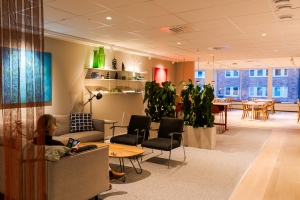
The new office became an environment with greater flexibility, better support for different kinds of work, and a clearer connection to the organisation’s identity. It includes spaces for collaboration, creative meetings, focused work and social interaction. In that sense, the office is not just a workplace, but a resource that strengthens culture, participation and future ways of working.
For organisations that want to make better-informed workplace decisions, ST’s journey shows the value of starting with the right questions. With Workplace Adequacy™ Survey, it becomes possible to build a stronger evidence base, prioritise more effectively, and create a workplace that not only functions well in practice but also supports the organisation’s mission.
Book a demo
Would you like to see how Workplace Adequacy™ Survey can help you understand needs, prioritise effectively and create a workplace that supports both the organisation and its culture? Book a demo.